- hasson@princeton.edu
- Website
- Faculty Profile
- Curriculum Vitae
- Download CV
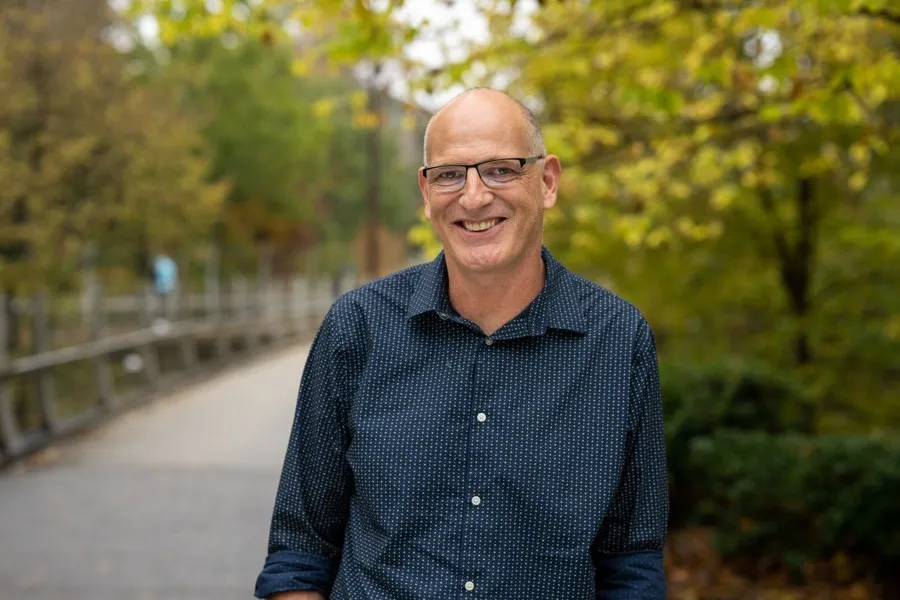
Uri Hasson
Principal Investigator · Professor
About
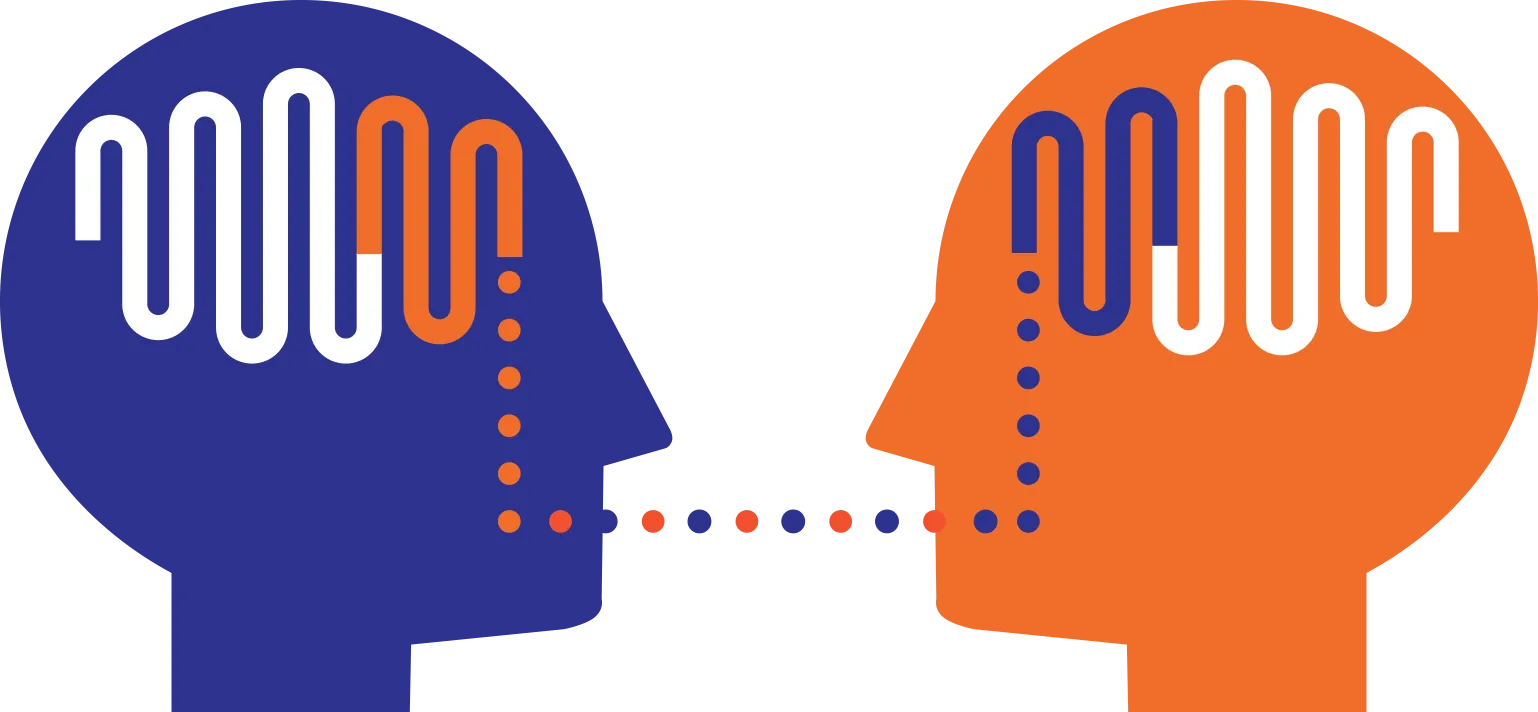
Uri Hasson grew up in Jerusalem, studied philosophy and cognitive science at the Hebrew University, completed his Ph.D. in Neurobiology at the Weizmann Institute of Science, and joined Princeton — where he is now a Professor in the Department of Psychology and the Neuroscience Institute — after postdoctoral training at NYU. His career has followed a single driving question: how does the brain process information as it actually unfolds in the world? Early on, he recognized that the tightly controlled experiments dominating neuroscience were stripping away the very complexity the brain evolved to handle. His response was to bring the real world into the scanner — having people watch movies, listen to stories, hold conversations — and develop inter-subject correlation (ISC), a family of methods that measure how brains align across individuals during shared experience, now used in over 19,000 publications worldwide. This model-free approach revealed a cortical timescale hierarchy in which memory is not a separate system but an intrinsic property of perception, and showed that successful communication is literally written in synchronized neural activity between speaker and listener. When deep learning arrived, it offered something ISC could not: explicit computational models that could engage with natural, continuous input. His lab found striking alignment between large language models and the brain’s language systems — but also a fundamental gap: industry AI learns from data volumes no human could encounter and lacks the developmental trajectory, embodiment, and social grounding that shape a human mind. That gap is now the frontier. His “understanding by building” program constructs AI agents that learn from real human experience as humans do, anchored by the First 1,000 Days Project, which recorded over a million hours of infant life across diverse households. Agents trained on these recordings already reproduce individual children’s language trajectories with striking precision — and the act of building them has itself yielded new insight: a system learning continuously from a changing world cannot update and act simultaneously without destabilizing, forcing a separation between online processing and deferred consolidation that mirrors, at the level of pure computation, why the brain concentrates learning during sleep. His work has garnered over 33,000 citations and earned him the NIH Director’s Pioneer Award, a Google Research Fellowship, and a Fellowship of the Association for Psychological Science.